
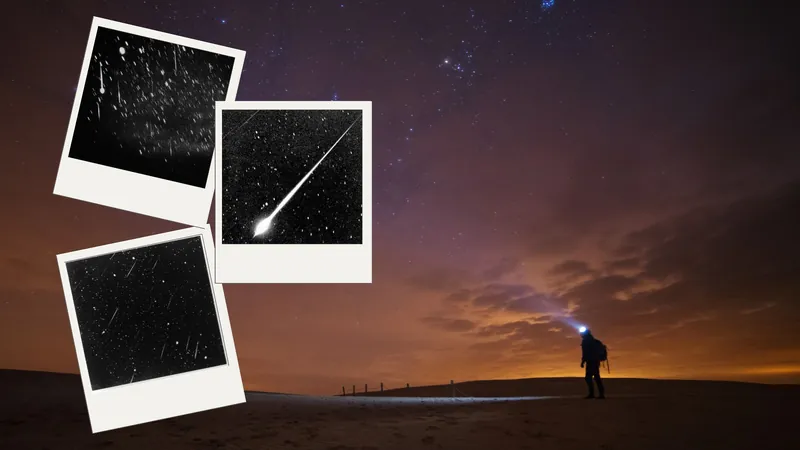
A sky lit by thousands of falling stars every minute: The spectacular 1966 Leonid meteor storm
Original headline: 'It looked like every star in the sky was falling': Eyewitnesses remember the great Leonid meteor storm of 1966 — space.com
More in Defense and aerospace news
On the night of November 17-18, 1966, Earth passed through an exceptionally dense debris trail left by comet Tempel-Tuttle, producing one of the most intense meteor showers ever recorded. Observers at Arizona's Kitt Peak National Observatory estimated a peak rate of 40 meteors per second—equivalent to 144,000 shooting stars per hour—turning the night sky into a celestial fireworks display.
For those who witnessed it, like Rodney Leist a 9-year-old in rural Mississippi, the event was unforgettable, creating sounds like 'zipping' and even a sulfur-like smell from burning space dust. This historic Leonid storm remains a benchmark for meteor activity, demonstrating the awe-inspiring power of our solar system's natural phenomena and offering a vivid reminder of humanity's tiny place within it all.
Read the original at space.com
Satirical commentary on real tech news, summarised with AI. Read the original source for the facts. How ZeroDaily works