
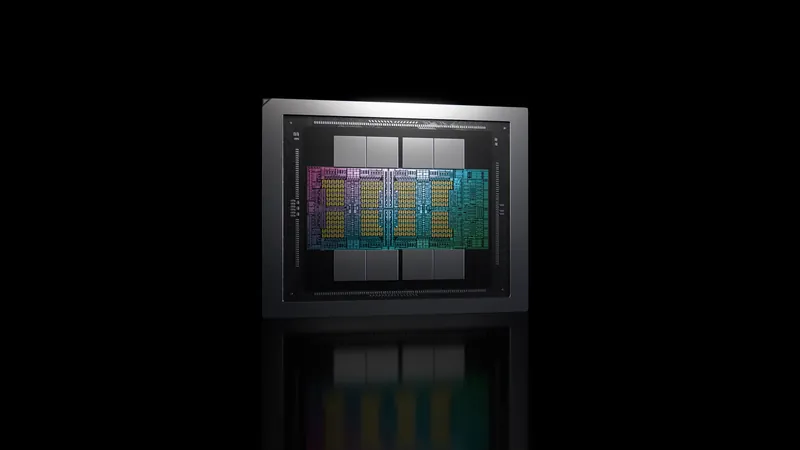
NVIDIA's Rubin GPU supercharges science simulations with massive core count
Original headline: NVIDIA Announces Rubin HPC — A New GPU to Accelerate Agents for Science, Engineering and Analytics — blogs.nvidia.com
More in Semiconductor and chip news
NVIDIA unveiled its new Rubin HPC GPU at the SC26 supercomputing conference, designed specifically for scientific and engineering simulations. The chip boasts over 50,000 CUDA cores—a record for a single GPU—alongside specialized sparse data acceleration and seventh-generation NVLink technology for faster connectivity between GPUs. This hardware is built to tackle the massive datasets common in fields like climate modeling, genomic analysis, and financial risk assessment.
The Rubin HPC aims to significantly speed up the simulation workflows that scientists and engineers use to test ideas, whether they're exploring new materials, molecules, or complex designs. NVIDIA's approach focuses on balancing compute power with data movement, ensuring those tens of thousands of cores stay fed with information rather than sitting idle. The result could shorten the path from initial exploration to real-world discovery and innovation across multiple high-stakes industries.
Read the original at blogs.nvidia.com
Satirical commentary on real tech news, summarised with AI. Read the original source for the facts. How ZeroDaily works