
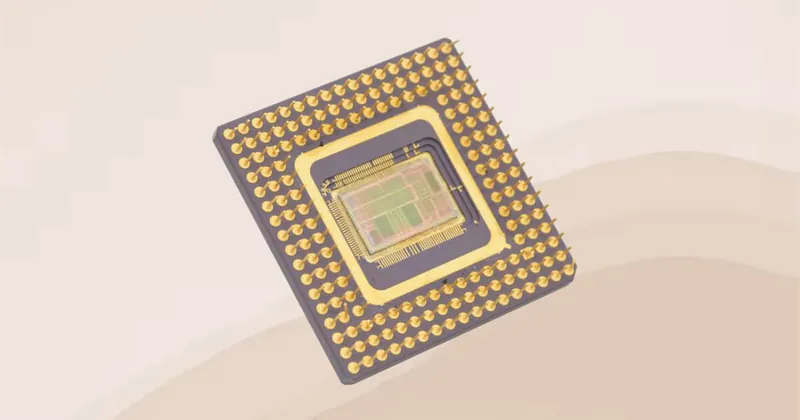
How the quirks of your PC's brain came from 1970s calculator chips
Original headline: The x86 CPU: From 4004 to 486 — pikuma.com
More in Semiconductor and chip news
This article traces the evolutionary history of the x86 CPU architecture from Intel's 1971 4004 chip up to the 486, explaining why modern computers still carry the baggage of decades-old design decisions. It argues that seemingly arbitrary features—like little-endian byte order, specific register names (AX, BX, CX, DX), and segmented memory addressing—aren't random but are frozen artifacts of backward compatibility, each a compromise made to keep old software running on new silicon.
For programmers and engineers, this means that understanding x86 assembly requires understanding its lineage, not just its latest manual. The real-world impact is that millions of lines of legacy code and fundamental system behaviors (like how a PC boots) are shackled to decisions made for 1970s terminals and calculators. The takeaway: computer architecture is a palimpsest of history, where every layer of innovation is built atop—and constrained by—the ghosts of chips past.
Read the original at pikuma.com
Satirical commentary on real tech news, summarised with AI. Read the original source for the facts. How ZeroDaily works