
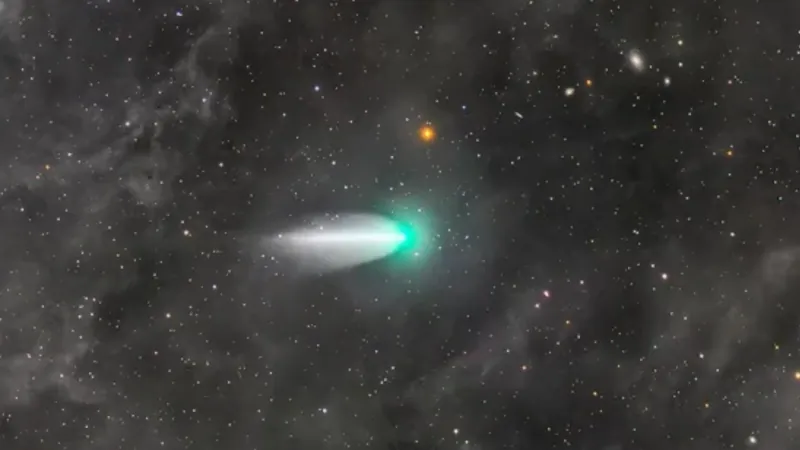
A dusty snowball exploded, becoming thousands of times brighter for telescopes.
Original headline: How escaping gases ripped apart a comet and caused it to become thousands of times brighter — space.com
More in Defense and aerospace news
Comet 220P/McNaught, a normally faint and unremarkable periodic comet, erupted in a dramatic outburst this summer. As solar heating vaporized ices beneath its dusty crust, escaping gas pressure violently ripped open the surface, ejecting hundreds of billions of pounds of fine dust into space. This immense dust cloud expanded around the comet's nucleus, forming a vast, bright coma.
The event transformed the comet from an object visible only to large professional telescopes into one that could be, for a brief period, spotted with binoculars from a dark site. It brightened by thousands of times, offering amateur astronomers and astrophysicists a rare chance to study a significant cometary eruption in real time. This natural spectacle underscores the dynamic and volatile nature of these ancient icy bodies as they journey through the solar system.
Read the original at space.com
Satirical commentary on real tech news, summarised with AI. Read the original source for the facts. How ZeroDaily works