
Google's new TPU systems flex hardware muscles for the AI era.
Original headline: TPUs — blog.google
More in Semiconductor and chip news
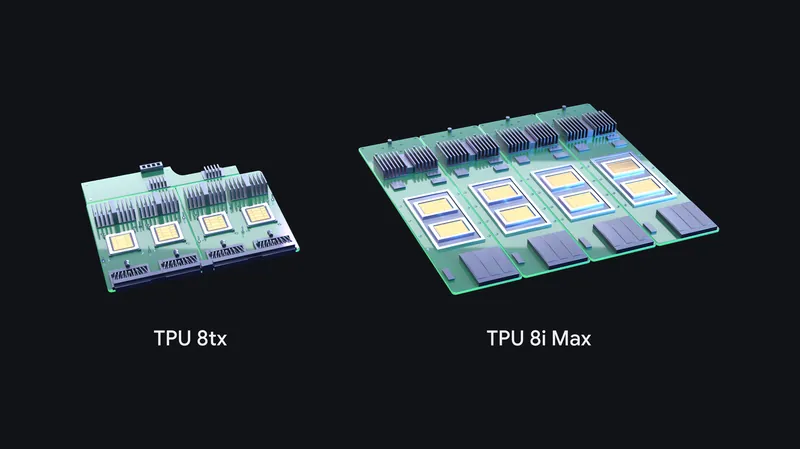
Google has announced two new Tensor Processing Unit (TPU) systems, marking a shift from focusing solely on chip design to delivering complete, modular computing systems. The company is responding to feedback from external organizations and highly regulated customers, who are demanding specialized hardware for AI reasoning across massive context windows and unique encryption needs for sensitive workloads. This new approach is built on a foundation of system balance and modularity, allowing Google to assemble compute, networking, and storage around its TPU chips.
The announcement signals Google's strategy to make its custom AI accelerators more accessible to a broader developer base, leveraging recent PyTorch support. By architecting TPUs as building blocks within its "AI Hypercomputer," Google aims to deliver specialized supercomputing configurations in months, not years, keeping pace with the rapidly evolving AI software landscape. For engineers, this could mean more flexible and powerful hardware options for training and running complex models at scale.
Read the original at blog.google
Satirical commentary on real tech news, summarised with AI. Read the original source for the facts. How ZeroDaily works