
How NASA's MAVEN spacecraft cracked the mystery of Mars' lost water and atmosphere
Original headline: On this day in space! Nov. 18, 2013: NASA launches MAVEN spacecraft to Mars to find out how the Red Planet lost its water — space.com
More in Defense and aerospace news
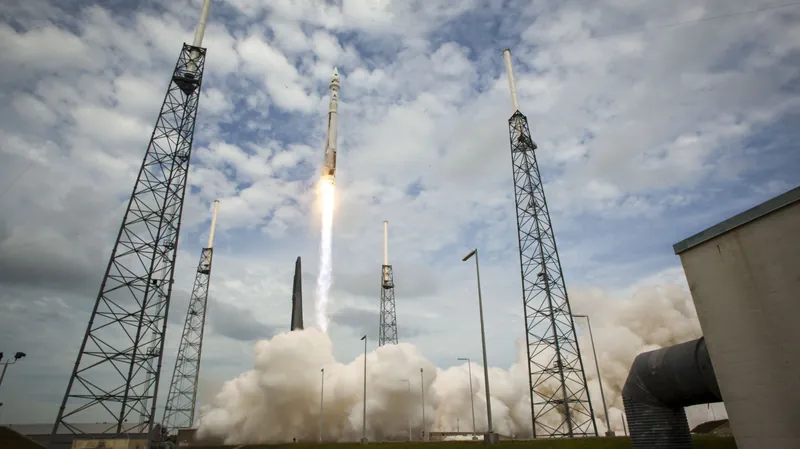
On November 18, 2013, NASA launched the MAVEN spacecraft to Mars on a mission to solve a planetary mystery: how the Red Planet transformed from a potentially habitable world with water into the cold, dry desert we see today. The orbiter was specifically designed to study the Martian atmosphere's interaction with solar wind—the stream of particles from the Sun—to measure how Mars has been losing its atmosphere to space over billions of years.
MAVEN spent over a decade in orbit, using sophisticated instruments to track atmospheric loss rates and composition. Its findings revealed that solar storms gradually stripped away Mars' protective atmosphere, which once held enough carbon dioxide to create a greenhouse effect warm enough for liquid water. This data is now crucial for planning future human missions, informing the radiation protection needed for astronauts, and continues to provide foundational science about planetary evolution decades after its launch.
Read the original at space.com
Satirical commentary on real tech news, summarised with AI. Read the original source for the facts. How ZeroDaily works