
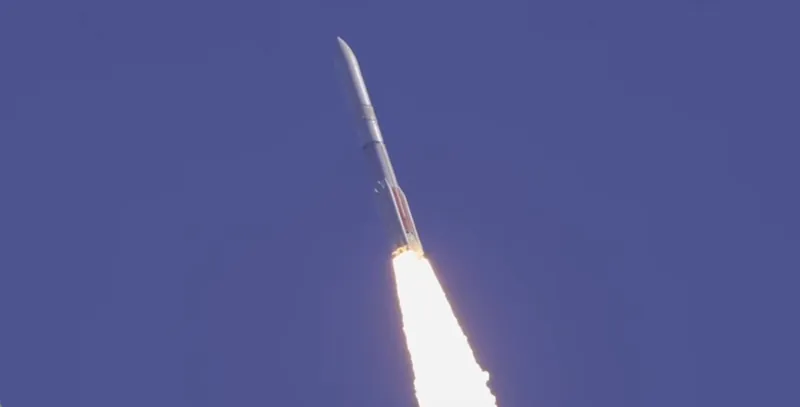
ULA's Vulcan rocket fails, losing 40 Amazon satellites after booster anomaly
Original headline: ULA lost a Vulcan Centaur rocket carrying 40 Amazon satellites 10 minutes after launch — but the failure began just after liftoff — space.com
More in Defense and aerospace news
On November 15, 2026, a United Launch Alliance Vulcan Centaur rocket, carrying 40 internet satellites for Amazon, failed during its ascent from Cape Canaveral. The company stated that while mission control lost contact around 10 minutes into the flight, the underlying problem—low performance from the first-stage booster—began almost immediately after liftoff. This caused the rocket stages to separate too early and at too low an altitude and speed, dooming the mission and the entire satellite payload.
This failure marks the third problematic flight for the Vulcan, ULA's next-generation workhorse designed to replace the retiring Atlas V. While previous issues with solid rocket booster nozzles were resolved, this new booster performance anomaly represents a significant setback. For Amazon, it means a costly delay in deploying its LEO internet constellation; for ULA, it raises fresh questions about the rocket's reliability as it seeks to fulfill its manifest, including crucial national security launches for the U.S. Space Force. The incident underscores the unforgiving nature of rocketry, where a flaw seconds after launch can't be overcome, even by a perfectly functioning upper stage.
Read the original at space.com
Satirical commentary on real tech news, summarised with AI. Read the original source for the facts. How ZeroDaily works